Solitaire Classic
- 4.7
- Rating
- 500.00K
- Installs
- Free
- Price

 Analysis by App-foxy
I picked up Solitaire Classic expecting a familiar card game I could play in short breaks, and that is exactly where it makes the most sense. It is a free solitaire game from Lynn Mobile Puzzle Games, with a romance-themed presentation and seasonal touches that give the traditional format a little more personality. The core appeal is still simple: deal a hand, look for useful moves, and try to build the four suits in order.
That straightforward design makes it approachable for a first-time player, but it also means the game is best judged as a focused casual card experience rather than a large all-purpose game. I would recommend it to someone who wants a calm way to fill a few minutes, especially if they already enjoy classic solitaire on a phone or computer. If you are looking for competitive multiplayer, a deep story, or a large collection of different card games, this is probably not the right place to start.
What to expect before your first deal
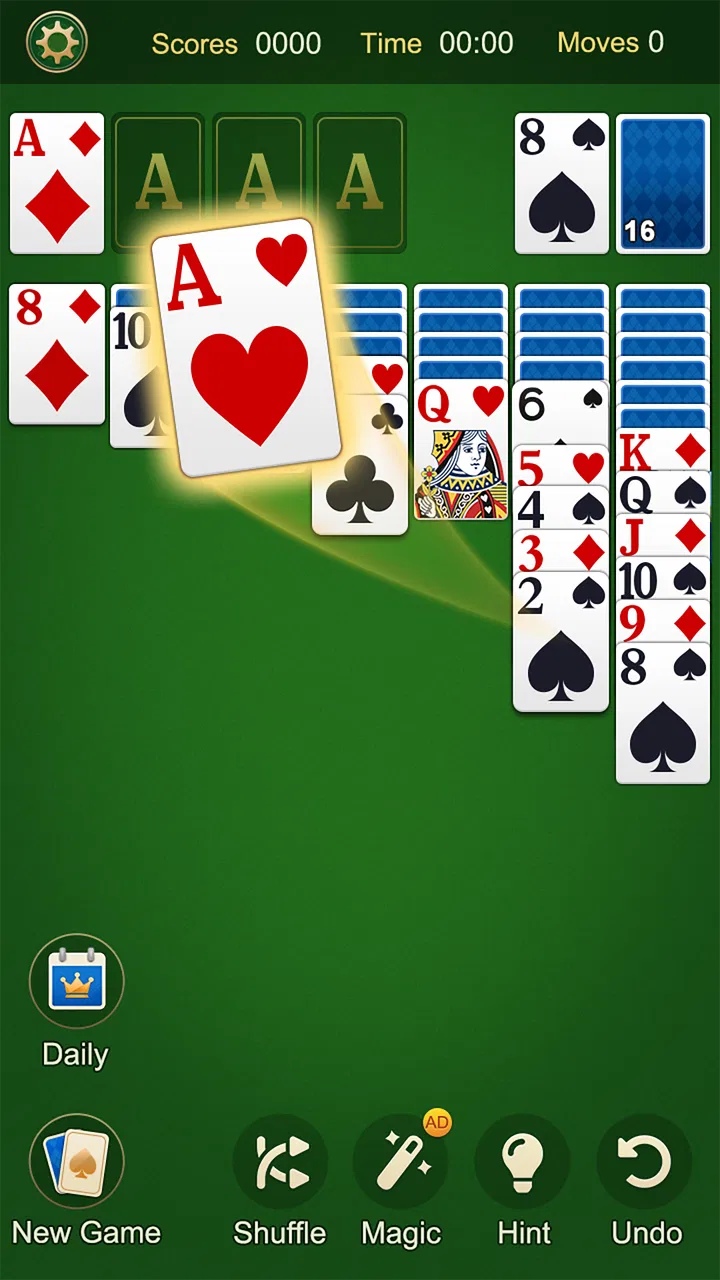
The game is listed in the card category and is suitable for Everyone, so its basic concept is easy to understand without any specialist knowledge. You do not need to learn a complicated rule set before playing. The useful starting idea is the same one used by familiar Klondike-style solitaire: uncover hidden cards, move cards in descending alternating colors where allowed, and send each suit to its foundation in ascending order.
You May Also Like

 Blood Strike: 2.5 Anniversary
Blood Strike’s Loadouts Turn Every Drop Into a Tactical Gamble
A close look at Blood Strike’s custom loadouts: how fast access to signature weapons reshapes its battle royale rhythm, rewards preparation, and narrows the gap between fights.

 Pandora - Music & Podcasts
Pandora’s Music Is Easy to Start, but Harder to Recover
Pandora’s strength is its low-effort path from a seed to a station. Its weak spot is how much confidence it asks you to place in connection, setup, and quiet recovery.

 8 Ball Pool
 Is Built on Rivalries, Rematches, and Routine
A close look at the rivalries, rematches, shared routines, and unanswered safety questions that turn a quick pool match into a persistent mobile community.

 Samsung Music
’s Quiet Strength Is Playing What You Already Own
Its reach comes less from spectacle than from dependable access to a personal library. That simplicity is both the app’s strongest retention engine and its ceiling.

 AccuWeather: Weather Radar
AccuWeather Review: A Quick, Clear Forecast for Everyday Decisions
For everyday plans, the best forecast is the one you can understand quickly. AccuWeather makes rain timing, radar, and local conditions easy to act on, with a few trade-offs.

 Hill Climb Racing
Why Hill Climb Racing Still Turns Crashes Into One More Run
A tiny car, a bumpy hill and one more upgrade: Hill Climb Racing keeps resurfacing because its simple chaos makes every near-miss feel personal.
More From Our News Desk
View All News


I found the romance angle more noticeable as a mood than as a replacement for the card game itself. The store presentation also mentions a Summer Event, which gives the experience a seasonal frame. That combination may appeal to players who find a plain digital deck a little dull, but the lasting reason to return is still the puzzle of the deal. The theme can make the game feel friendlier, while the card decisions provide the actual replay value.
The game is free to download, with optional in-app items priced from $0.99 to $29.99 each. I would approach those purchases as extras rather than part of the basic learning process. A new player should first decide whether the ordinary card loop feels satisfying without spending anything. That is also a useful way to avoid confusing a decorative or convenience-oriented purchase with a move that genuinely improves your solitaire skill.
Its audience size suggests that the format has found a receptive group: the game has passed 500 thousand installs and holds a 4.9 average from around 1.6 thousand ratings. Those figures are encouraging, but they do not remove the main question for a new player: do you enjoy making small, careful decisions repeatedly? Solitaire is quiet and individual, and this version stays close to that character.
Installing it without overthinking the choice
The game runs on Android 6.0 or later, so it is available to many older devices as well as newer phones. The current version is 1.2.4. After installing, I would keep the first session deliberately short. Open the game, look at the cards, and start a deal instead of trying to understand every visual element immediately. A solitaire board becomes much clearer once there are actual cards to move.
Because the game is rated for Everyone, it is a reasonable option for a family member who wants a gentle card puzzle rather than an intense action game. That does not mean every player will enjoy it equally. Someone who needs constant novelty may find the repeated structure too narrow, while someone who likes familiar routines may appreciate precisely that lack of clutter.
My practical advice is to play with the phone held in the position that makes the tableau easiest to read, rather than rushing through the opening screen. On a smaller display, card spacing and text size can affect how confidently you plan a move. If you are playing during a commute or while waiting for an appointment, give yourself enough attention to distinguish the exposed cards before tapping. Solitaire rewards seeing the board, not simply reacting to the most obvious card.
The first successful action is about opening the board
For a first meaningful success, I would not define success as finishing an entire deal. The better early goal is to uncover a face-down card without blocking the cards that may need to move later. Look for a legal move that transfers a visible card onto a card of the opposite color and one rank higher. That single action can reveal new information and gives you a clearer picture of the available route.
When several moves appear possible, I usually prefer the one that exposes a hidden card. Moving a long visible sequence can look productive, but it may simply rearrange cards without increasing what I know about the board. Exposing a concealed card creates a new decision. This is one of the most useful habits for beginners because it turns the first few turns into information gathering rather than random card shuffling.
Keep the foundations in mind, but do not send every available low card there immediately if doing so removes flexibility from the tableau. Aces are generally safe foundations when they are available, yet the next move should still leave room to build and uncover. The trade-off is small but important: a card that looks finished may be more useful temporarily in the tableau if it helps release another column.
Another helpful first-session habit is to pause before undoing a move. If the game offers an undo action in your play session, use it as a learning tool rather than as a way to erase every imperfect decision. Compare the board before and after the move, then ask whether the change exposed a card, opened a column, or improved access to a foundation. That turns a mistake into a quick lesson about the deal instead of a frustrating dead end.
How I read a deal when the obvious move stops working
The most common beginner confusion is assuming that every visible card should be moved as soon as it becomes legal. In solitaire, legal does not always mean useful. A move can be allowed and still make the next several turns harder. I try to rank moves by what they reveal and by how many future options they preserve.
Empty columns are another point that often causes hesitation. A vacant tableau space is valuable because it can usually receive a king or a sequence led by a king, depending on the rules being used. I avoid filling that space simply because I can. Keeping it open may be the difference between moving a blocked sequence later and having nowhere to place it.
Players also sometimes treat the foundation as a finish line for every card that is currently available. I see it more as a second workspace. Building a suit upward is good, but the tableau is where you create access to hidden cards. If moving a card to the foundation prevents a needed color alternation or removes a useful temporary card, waiting can be the stronger choice.
The romance and seasonal presentation can make the game feel less severe than a bare-bones solitaire program, but the underlying puzzle still has limits. Some deals will feel generous, while others may leave you with very few productive choices. I would not interpret an unsuccessful hand as proof that I missed one magical move. Sometimes the better response is to restart and apply a different opening plan.
A short everyday routine that works well
Imagine that I have ten minutes before an appointment. I open the game, start one deal, and spend the first minute identifying moves that uncover face-down cards. I avoid rushing cards to the foundations, keep an eye on any empty column, and stop if the board becomes too cramped to read comfortably. This gives me a complete little puzzle session even if I do not finish the deal.
For a longer evening session, I would use a different rhythm. I would play more slowly, consider the effect of each sequence move, and use the seasonal or romantic atmosphere as background rather than expecting it to provide a separate story. That distinction matters: this is a game for repeated card decisions, not a narrative romance app with solitaire added on top.
One non-obvious benefit of this format is that it can work as a gentle transition between activities. A quick deal gives my attention something structured to do without demanding the commitment of a long level or online match. The limitation is equally clear: if I need a strong sense of progression, social interaction, or changing objectives, the same short-loop design may start to feel repetitive.
Where it differs from ordinary solitaire alternatives
Compared with a plain solitaire app that focuses only on cards, this version has more of a themed, seasonal identity. That can make it feel warmer and more inviting during casual play. The trade-off is that players who want the most stripped-down interface may prefer a traditional utility-style solitaire game with no surrounding mood or event framing.
Compared with a broader card-game collection, Solitaire Classic is narrower. A collection may offer several rule variations, while this game is easier to approach because the central activity remains familiar. I would choose this one when I already know I want solitaire. I would choose a multi-game collection when I am undecided between solitaire, freecell, spider, and other formats.
It also differs from competitive card apps because the main challenge is personal decision-making, not defeating another player. That makes it a better fit for quiet breaks and uneven attention. It is a weaker choice for anyone who needs live opponents, rankings, or a strong social reason to return.
The high average rating and substantial install count make it easy to see why a newcomer might try it, but I would still judge the experience by the details of your preferred play style. A familiar ruleset, a pleasant theme, and short sessions are meaningful strengths. They do not compensate for the lack of variety if your enjoyment depends on constantly learning new systems.
Questions worth settling before you commit
Is it genuinely free to begin? Yes. The game is free, and optional in-app purchases range from $0.99 to $29.99 per item. My recommendation is to play several ordinary sessions before considering any purchase, because the central solitaire loop should be enjoyable on its own.
Is it appropriate for a child or an older relative? Its Everyone content rating makes it broadly suitable, and the familiar card rules reduce the learning barrier. I would still show a first-time player how the tableau and foundations work, since the challenge is not the age rating but understanding which moves preserve future options.
Can a complete beginner get a satisfying result quickly? Yes, if the first target is a useful board-opening move rather than an immediate win. Uncovering a hidden card, preserving an empty column, and resisting unnecessary foundation moves are enough to create a meaningful first session.
Will it suit someone who wants a more advanced solitaire challenge? It may, if that player enjoys careful planning within a familiar format. However, a dedicated alternative with several rule variants may be better for someone who wants to compare different solitaire systems rather than repeatedly refine play in one central style.
Does the seasonal presentation change the basic game? It gives the experience a summer and romantic flavor, but I would still approach the app as a solitaire puzzle first. The cards remain the reason to play; the theme is what makes the routine feel less plain.
Who should install it, and who should skip it
I think Solitaire Classic is a good match for first-time mobile solitaire players, people who enjoy quiet puzzles, and anyone who wants a familiar activity that can be played in short bursts. The game is especially approachable when you treat each deal as a small planning exercise rather than a test you must complete perfectly.
I would skip it if your priority is multiplayer competition, a large variety of card rules, or a story-driven experience. I would also be cautious if you dislike optional purchase prompts in free games, even though the basic download costs nothing. The presence of items priced up to $29.99 means it is sensible to keep spending separate from learning the game.
For me, the strongest reason to recommend it is the balance between a recognizable solitaire structure and a more welcoming romantic-seasonal presentation. The most important limitation is that the same focus can become repetitive for experienced players who want constant new mechanics. Install it when you want a calm, familiar card puzzle with a bit of atmosphere, start by learning to open the board intelligently, and let the first successful move be a well-chosen one rather than an instant win.
FAQs for Solitaire Classic
01What platforms is Solitaire Classic available on?
Solitaire Classic is available for download on both Android and iOS platforms. Whether you're using a smartphone or tablet, you can enjoy the timeless card game on your preferred device. The app can be found on the Google Play Store for Android users and the Apple App Store for iOS users.
02Does Solitaire Classic require an internet connection to play?
No, Solitaire Classic does not require an internet connection to play. This makes it a perfect choice for users who want to enjoy a game during offline periods, such as traveling or in areas with poor connectivity. However, some features, like leaderboards, might need a connection.
03Are there any in-app purchases in Solitaire Classic?
Yes, Solitaire Classic includes in-app purchases. While the game is free to download and play, these purchases offer additional features such as ad-free gameplay, extra themes, or special card designs. However, they are optional and not necessary to enjoy the full game experience.
04What are the main features of Solitaire Classic?
Solitaire Classic includes a variety of features such as customizable card themes, daily challenges, and different game modes like Draw 1 and Draw 3. It also offers statistics tracking, undo options, and hints to help players improve their skills. These features enhance the traditional solitaire experience.
05Is Solitaire Classic suitable for all age groups?
Yes, Solitaire Classic is suitable for all age groups. The game offers a simple and intuitive interface that makes it accessible to both children and adults. Its classic card game mechanics are easy to understand, making it a great choice for anyone looking to enjoy a relaxing and engaging game.
Pros
- Simple and intuitive interface.
- Offline play without internet required.
- Customizable card designs.
- Smooth and responsive controls.
- No intrusive ads during gameplay.
Cons
- Limited game modes available.
- Graphics feel a bit outdated.
- No multiplayer features.
- Occasional in-app purchase prompts.
- Lacks advanced statistics tracking.

Solitaire Classic
Gallery